
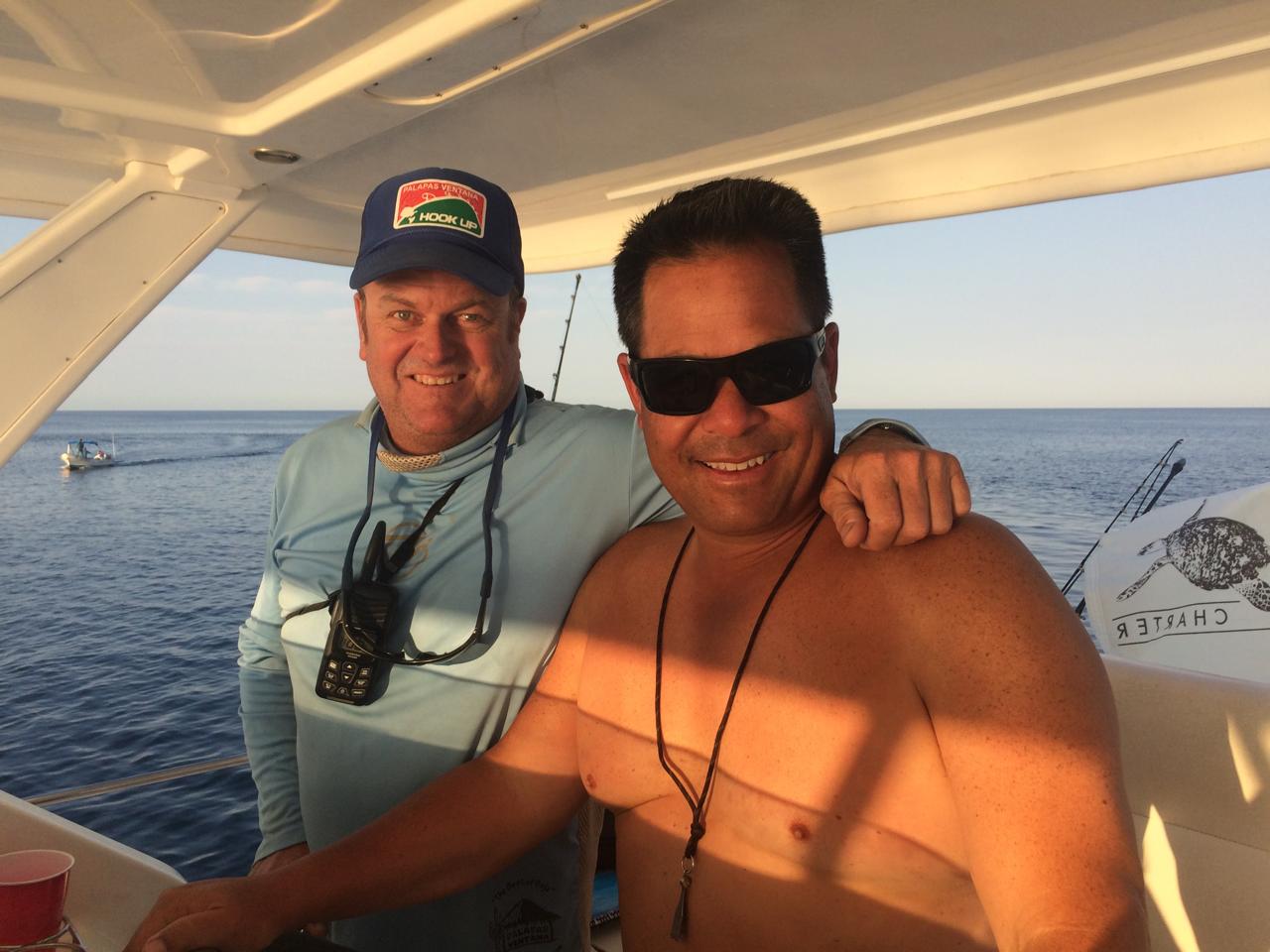
John Ashley · Mag Bay
Mag Bay recommended packing list
Ambassador notes for Santa Margarita island camp: luggage, dry bags, fly gear, rentals, tipping, and casitas.
Get ready for a true “Old Baja” adventure. We’re heading to an island outpost that only a few have been to. We will be traveling to and staying on the Magdalena Bay outer island of Santa Margarita. Here are some items and tips that will make your trip flow smoothly.
This trip will require a travel day from the lodge at Palapas Ventana to a panga departure point on Mag Bay. This means that your gear will be loaded onto the shuttle van at the resort and driven over to Mag Bay with you. An important consideration is the size of your luggage. If you can pare your luggage down to the essentials that will make loading much quicker.
Additionally, your luggage will travel by open panga from the departure point, across Mag Bay to the island camp. I strongly suggest putting items that cannot get wet (camera gear, clothing, medications, documents) into a dry bag.
All bedding, pillows, and blankets are provided, so you do not need to pack those.
Suggested items for a Mag Bay excursion
- Dry bag: Clothing, electronics, documents.
- Documents: Passport, Mexican fishing license, FMM visa (only required if staying longer than a week). Put these in a ziplock bag.
- Cash: Daily tips to the captain/guides, for the Mag Bay crew, and for Palapas Ventana staff. Please follow the tipping suggestion outlined on your invoice. We may also stop for tacos both on the way to Mag Bay and heading back. Having some smaller bills (USD are fine) to pay for your tacos at the taco stand is very convenient.
- Credit card: We will stop at Walmart in La Paz on the way to Mag Bay for you to buy whatever types of extra drinks you’d like out on the island. This includes beer, wine, hard alcohol, and soft drinks. There will always be purified water and traditional Mexican flavored drinks for all meals that are included.
- Lightweight waterproof jacket: The weather changes quickly at Mag Bay. Mornings can be foggy and wet, and afternoons can quickly become perfect for shorts and a tee shirt. A light jacket that can handle getting wet is an essential piece of gear. You may want it for the panga crossing to and from the island as well, so pack it in an accessible place. You may want to consider waterproof bibs too for fishing.
- Hat / sun shirt / sun pants / sunscreen: The sun can be intense. Come prepared. A painful sunburn makes for an unpleasant fishing day.
- Insulated water bottle: Nice to have both in camp and on the boat. You can fill your water bottle while on the boat from the purified water dispenser, and this is more accessible than using the small plastic cups provided.
- Electrolyte powder: Prevent cramps and keep your energy up. Not essential, but if you’re prone to these things, powdered electrolyte packs to add to your water bottle are great to have.
- Non-slip shoes: I prefer closed-toe, non-slip shoes for when I’m on the pangas.
- Camp shoes: Closed-toe or flip flops for walking around camp. Protect your feet. A cut on the foot can be a trip-ender, and there can be sharp things out there.
Additional: Bring a headlamp for walking around the camp at night, and bring any meds that you might need. I strongly suggest Imodium and some type of seasickness medication if you are prone to it. Finally, a cell phone lanyard is a very smart investment. If you plan on bringing some fish home, bring a cooler. I don’t bring much fish home, but if a few mahi or wahoo fillets want to come home I prefer to use a small soft Yeti-type cooler that I carry on with me.
Mag Bay fly fishing gear
Fly fishing rods
You will have opportunities to catch large bluewater species (marlin, tuna, dorado) as well as smaller inshore fish in the mangroves and sand flats. I would strongly recommend 12-16wt rods for offshore fly fishing. The TFO Bluewater series of rods is very common out there. We have one for rent at Palapas, contact us first come first served. For fishing the mangroves I would recommend 8-10wt rods. Many anglers have come with only 12wts and they have done just fine. If you own a 12wt and are comfortable with it, it will do well provided it is a saltwater-focused rod. Solid 12wts that I have seen out there have been G. Loomis, Orvis, and Temple Fork Outfitters. There are other solid brands that I am certain would hold up, but I cannot comment on them not having seen them in action.
Fly fishing reels
Offshore reels should be high quality and biased toward large backing capacity (300 yards of 80lb gel-spun). Large bluewater fish will be fought much more from the reel than the rod, so a strong drag that can handle long runs is important. Popular brands on the marlin grounds are Tibor, Hatch, Nautilus, Mako, Sage, and Lamson. On the entry side of reels, the Redington Rise and Behemoth have both performed well. Inshore reels should have a good drag as well and should have at least 200 yards of backing capacity.
Offshore (marlin / tuna) lines
Your “daily driver” for fishing for marlin will be a sinking tip, tropical-rated, heavy test core fly line. Cortland makes some billfish-specific fly lines with 50lb cores. These have become very popular out on the marlin grounds. SA and Rio also have their variations of these lines. Be careful to select tropical or high water temperature lines. Some anglers prefer an intermediate line instead of a full sink. These are acceptable as well. Your second offshore line could be a floating tropical-rated, heavy core line. We use these infrequently, however a topwater tuna or marlin take is not impossible. Bring spare lines and purchase lines with a welded loop end for attaching leaders. We have nail-knotted on leaders, but we prefer the reliability of a welded loop.
Inshore (mangrove) lines
Sinking tropical-rated line to match your rod weight. A second line could be a floating line. There can be topwater action in the mangroves, and if you’re there for it… hold on. Both should be tropical or high water temperature rated.
Offshore flies
For offshore and the marlin grounds, be sure to bring a selection of 4-6" sardina flies in tan/white, brown/white, black/white, and blue/white. There may be a slight bias at Mag Bay for blue/white on the sardina fly. Large marlin flies are very important. Look for 6-12" 4/0 to 8/0 marlin-specific flies. We have a selection of proven marlin flies for sale in the restaurant fly shop. Supply is limited. For offshore tuna, you’ll be fishing them deep most of the time, and I’ve had great success on the yellowfin tuna with black/white clousers in size 1 to 2/0. Other colors are good to have. Buy a variety. Offshore dorado will eat your sardina flies, but a good pattern to also have for them is the “Kinky Muddler” in tan, brown, or blue over white. Again, we have these for sale in our fly shop.
Inshore flies
For fishing the mangroves and sand flats, I would suggest a variety of sardina flies similar in colors to the offshore sardinas but on smaller hooks, 1-2/0. Add olive over white for inshore sardina. The almighty clouser is a good one to have with you. I prefer black/white, tan/white, yellow/white, and chartreuse/white size 1 to 2/0. Finally throw a few bass poppers in there on heavy hooks. Occasionally there will be topwater action up against the mangroves, and that can be insanely fun if you’re rigged up for it.
Leaders
For the marlin grounds, we keep it really simple and prefer to fish a level leader system consisting of a 6' to 9' length of 60 to 100lb fluorocarbon. We do not fish IGFA leader systems. However if you’d like to bring something along those lines (knotted leaders with butt sections, class tippet, and shock tippet), we will loop it on for you. Bring 100 yard rolls of 60, 80, and 100lb high quality fluorocarbon. For fishing the mangroves you will need 20, 30, and 40lb rolls of fluorocarbon. We may tie in butt sections on your mangrove rigs where presentation and accuracy are more important.
Extra gear to bring
A great thing to have with you while on board is a good set of line shears/clippers for safety as well as when knotting up, also a good pair of protective fishing gloves (short finger is okay), and you may also want to bring finger tape or sleeves.
John Ashley · Hardcore setup
Hardcore Mag Bay: chasing striped marlin
If you are coming specifically to hunt striped marlin on Mag Bay, build around a dedicated bluewater kit. This is the hardcore short list Juanito recommends for serious striped-marlin days.
- Rod: A 12wt Orvis Helios is an excellent recommendation for the striped-marlin program.
- Bring two rigs: a complete 12wt outfit (rod, reel, backing, and fly line) and a 10wt outfit too.
- Big reels: for the heavy side, look at Hatch, Tibor, Nautilus, or Mako.
- Fly lines: warm-water sink tip or intermediate heavy-core “big game” lines. Bring an extra line - marlin days eat lines.
- Leaders: 60, 80, and 100lb fluorocarbon.
Palapas Ventana Marlin Camp rentals
We have marlin-suitable rods and reels available as rentals. These are on a first come, first served basis. Please reach out if you’d like for us to hold gear for you.
Our gear rentals consist of 12 and 14wt Temple Fork Outfitter (or equivalent) rods and Lamson Liquid Max reels. Importantly, for the reels we provide the reel with backing but without a fly line. Fly lines take a beating on the marlin. We strongly suggest you bring two fly lines. Anglers would need to purchase and bring an appropriate, heavy core, sinking tropical bluewater line to match the rod they will be renting (12 or 14wt). Our suggested line is Scientific Anglers Sonar Titan Pelagic (500 grain for 12wt rods and 700 grain for 14wt). Make sure you order the warm or tropical version of this line. We will have these lines available in our gear shop in the restaurant. Please confirm availability with us before you arrive.
In addition, we also have flies and fluorocarbon leader available in the fly shop. Again, it’s a great idea to confirm availability.
Tipping
Tips are earned, not expected. If you’d like to show appreciation for a job well done, bring cash in either U.S. dollars or pesos. I would suggest bringing 10s and 20s along with larger bills.
Boat tipping (captain + guide): Plan on $40 USD per day for the captain and $40 USD per day for the guide - $80 USD total per day for the boat. Tip both at the end of each fishing day. If you are sharing the boat, split that daily boat total among the anglers.
Guide tipping: The guide tip covers translating, selecting flies, releasing bycatch, tying knots, and managing your fight with a marlin.
Camp staff tipping is done at the end of your stay at our Marlin Camp. There will be a short thank you speech and then a tip jar will be brought out for the cooks, camp manager, and housekeeping to share. Please feel free to put in that jar an appropriate gratuity if their service goes beyond expectations.
Housing
Each pair of anglers will be housed in a simple but clean casita on the island of Santa Margarita. The casitas will have their own bathrooms with flushing toilets and showers. There will be electricity in each casita to run chargers and/or sleep apnea machines. A strong suggestion is to bring a battery for your sleep apnea machine if possible as a backup power source should the town power temporarily shut down. Additionally, I highly recommend a small surge protector for your electronics.
Your casita will have two beds in it with a source of filtered clean drinking water. Each day your room will be cleaned. The casitas are simple and they get the job done. If you have any problems with the casitas, please notify any of the staff (kitchen, guides, maintenance) of the problem so we can correct it immediately.
There are rod racks in front of each casita for you to leave your rods rigged. Some casitas have a concrete porch out front that folks have used to rig up rods or enjoy a cold beer from.
If you have any additional questions about the trip, please reach out to me at john@palapasventana.com and I will be happy to help you.
Suerte!
JuanitoJohn Ashley · Fly fishing ambassador


